
Introduction
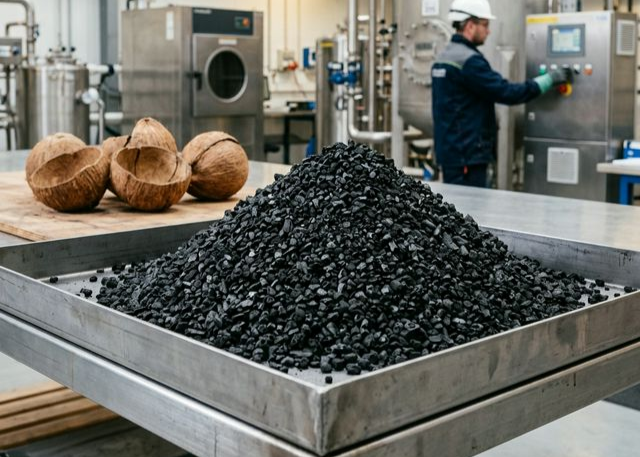
Coconut shell activated carbon is one of the most efficient and eco-friendly filtration materials available today. Derived from high-quality coconut shells, this form of activated carbon is widely used across industries for purification, adsorption, and filtration applications. Its superior hardness, high adsorption capacity, and sustainable origin make it a preferred choice for water treatment, air purification, and industrial processes.
With increasing environmental concerns and the demand for clean water and air, coconut shell-based activated carbon has become a key material in modern filtration technologies.
What is Coconut Shell Activated Carbon?
Coconut shell activated carbon is a micro-porous form of carbon produced through the controlled carbonization and activation of coconut shells. The activation process creates millions of tiny pores on the surface, increasing the surface area significantly—often exceeding 1000 m² per gram.
This high surface area enables the material to effectively trap contaminants, chemicals, odors, and impurities from liquids and gases.
Key Features and Benefits
1. High Adsorption Efficiency
Coconut shell activated carbon has a highly developed micro-porous structure, making it particularly effective in removing low molecular weight contaminants such as chlorine, VOCs (Volatile Organic Compounds), and organic pollutants.
2. Superior Hardness
Compared to other types like coal or wood-based carbon, coconut shell carbon is harder and more durable. This results in lower attrition loss and longer operational life.
3. Eco-Friendly and Renewable
Coconut shells are a natural, renewable resource. Utilizing them for activated carbon production supports sustainability and reduces agricultural waste.
4. Low Ash Content
It contains minimal ash, which ensures higher purity and better performance in sensitive applications like drinking water purification.
5. Cost-Effective
Due to its durability and efficiency, coconut shell activated carbon offers excellent value over time, reducing replacement frequency and maintenance costs.
Standard Available Mesh Sizes
Coconut shell activated carbon is available in various particle sizes to suit different applications:
- Granular Activated Carbon (GAC): 4×8, 8×16, 12×40 mesh
- Powdered Activated Carbon (PAC): 100, 200, 325 mesh
- Pelletized Carbon: 3mm, 4mm diameter
The choice of mesh size depends on the filtration system and the specific contaminants being targeted.
Applications
Water Treatment
Coconut shell activated carbon is extensively used in drinking water purification systems, municipal water treatment plants, and wastewater treatment facilities. It effectively removes chlorine, bad taste, odor, and harmful organic compounds.
Air and Gas Purification
It is widely used in air filters, gas masks, and industrial exhaust systems to remove harmful gases, odors, and pollutants.
Gold Recovery
In the mining industry, activated carbon plays a crucial role in gold extraction through the carbon-in-pulp (CIP) and carbon-in-leach (CIL) processes.
Food and Beverage Industry
Used for decolorization and purification in sugar processing, edible oil refining, and beverage production.
Pharmaceutical Industry
Ensures high purity levels by removing impurities during drug manufacturing processes.
Why Choose Coconut Shell Over Other Types?
Compared to coal-based or wood-based activated carbon, coconut shell carbon offers:
- Higher microporosity
- Better adsorption of smaller molecules
- Lower dust generation
- Longer service life
These advantages make it especially suitable for applications requiring high precision and purity.
Conclusion
Coconut shell activated carbon stands out as a high-performance, sustainable solution for modern filtration needs. Its superior adsorption capacity, durability, and eco-friendly origin make it an ideal choice across multiple industries.
As environmental standards continue to tighten and the demand for clean resources increases, coconut shell activated carbon will play an even more critical role in ensuring efficient and sustainable purification systems.